CARE GUIDE
CARE THAT CONTINUES
Thoughtful care helps preserve the structure, finish and character of a garment. Small habits between wears can reduce unnecessary cleaning, protect delicate details and allow each piece to remain part of your wardrobe for longer.
START WITH THE CARE LABEL
Always read the care label before cleaning, steaming or pressing a garment. Instructions are determined by the complete construction of the piece, including its outer fabric, lining, embroidery and internal structure.
When the guidance in this article differs from the care label, the care label always takes precedence.
DAILY CARE
AIRING
Not every wear requires cleaning. After wearing a garment, allow it to air in a well ventilated space before returning it to the wardrobe.
Airing helps release moisture and light odours while giving the fibres time to recover. Avoid leaving garments in direct sunlight for extended periods, as this may affect colour.
RESPONDING TO STAINS
Treat stains as soon as reasonably possible, but avoid rubbing or applying an unfamiliar cleaning product.
Blot gently with a clean, absorbent cloth and work carefully from the outside of the mark towards its centre. Always check the care label before introducing water or a cleaning solution.
For delicate fabrics, embroidery or an uncertain stain, consult a professional cleaner.
CLEANING
WASHING
Only wash a garment when permitted by its care label. Close buttons and fastenings before washing and use a gentle detergent suited to the fabric.
Avoid overcrowding the machine, as this can increase creasing and friction. Use the temperature and cycle stated on the label and do not soak a garment unless specifically instructed.
PROFESSIONAL CLEANING
Tailored and highly structured garments may require professional cleaning. Choose a cleaner experienced with tailoring and embroidered clothing, and point out stains, delicate details and any areas of concern.
Cleaning too frequently can place unnecessary stress on fibres and finishes. Professional cleaning should be used when needed and when permitted by the care label.
DRYING
Reshape a garment carefully after cleaning and allow it to dry according to its care instructions.
Avoid direct heat and prolonged sunlight. Do not tumble dry unless the care label explicitly permits it, as heat and movement can affect shape, size and surface finish.
STEAMING AND IRONING
Steam can help release light creasing and refresh a garment between wears. Keep the steamer at a suitable distance and test an inconspicuous area first.
When ironing is permitted, use the lowest effective temperature and place a clean pressing cloth between the iron and the fabric. Avoid pressing directly over embroidery, buttons or delicate surface details.
STORAGE
BLAZERS AND TAILORED GARMENTS
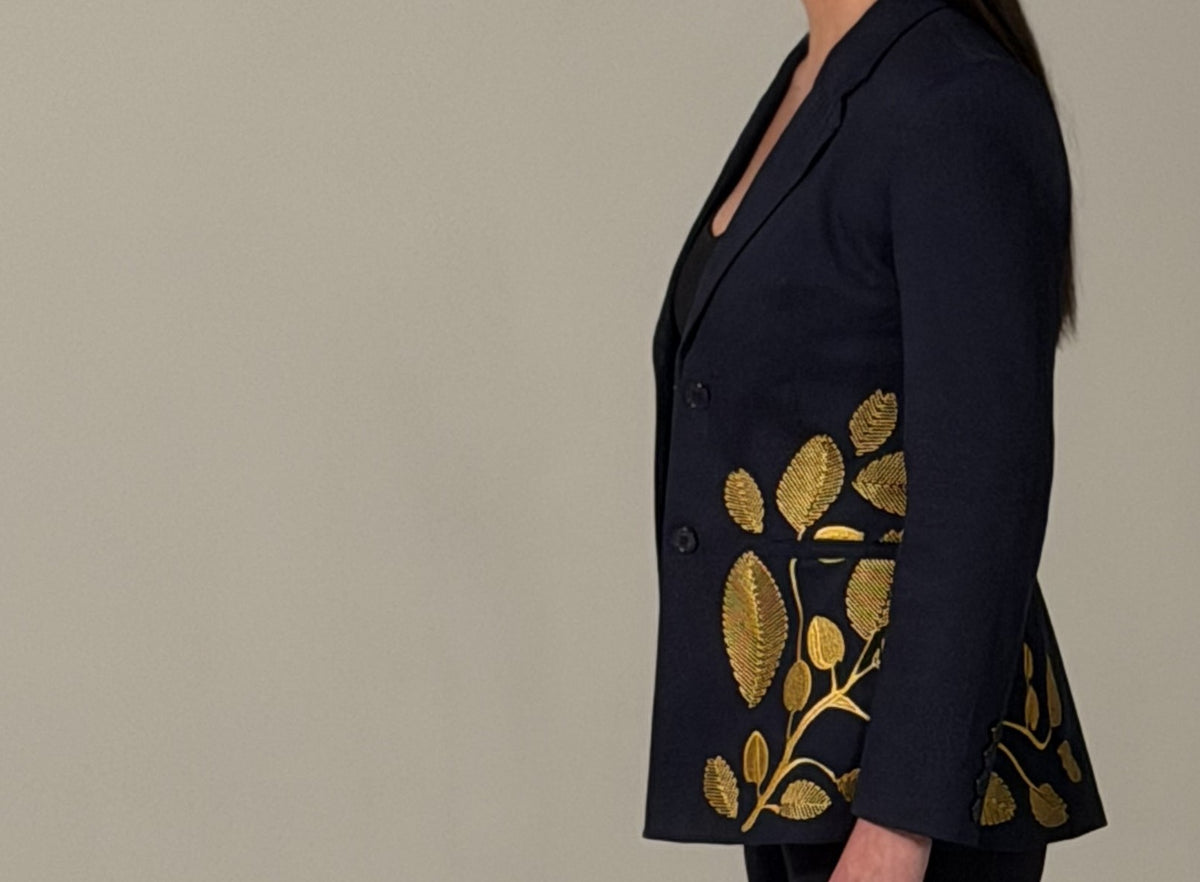
Store blazers and structured garments on a broad, supportive hanger that follows the shape of the shoulders. Allow enough space around each piece so that it is not compressed by neighbouring garments.
Empty pockets before storage and ensure the garment is clean and completely dry. A breathable garment cover can provide protection from dust without trapping moisture.
TROUSERS
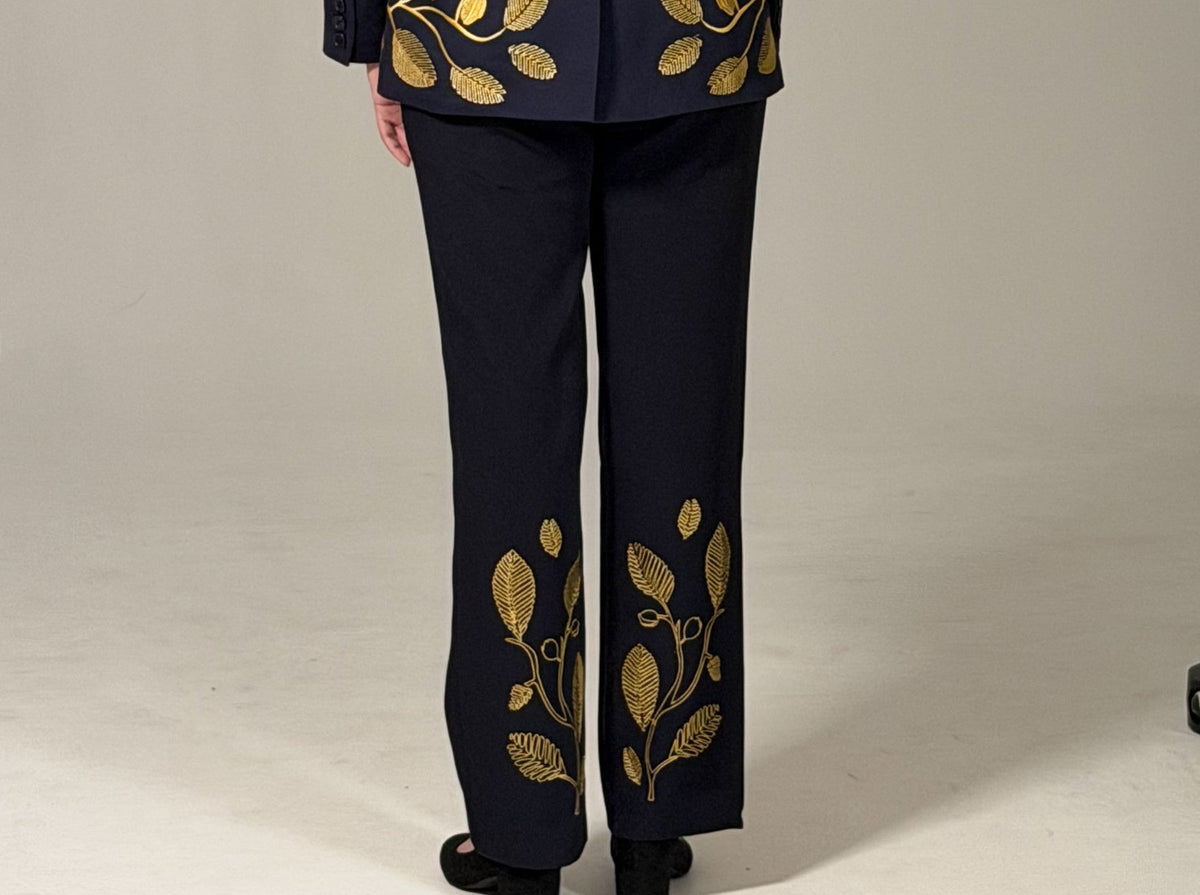
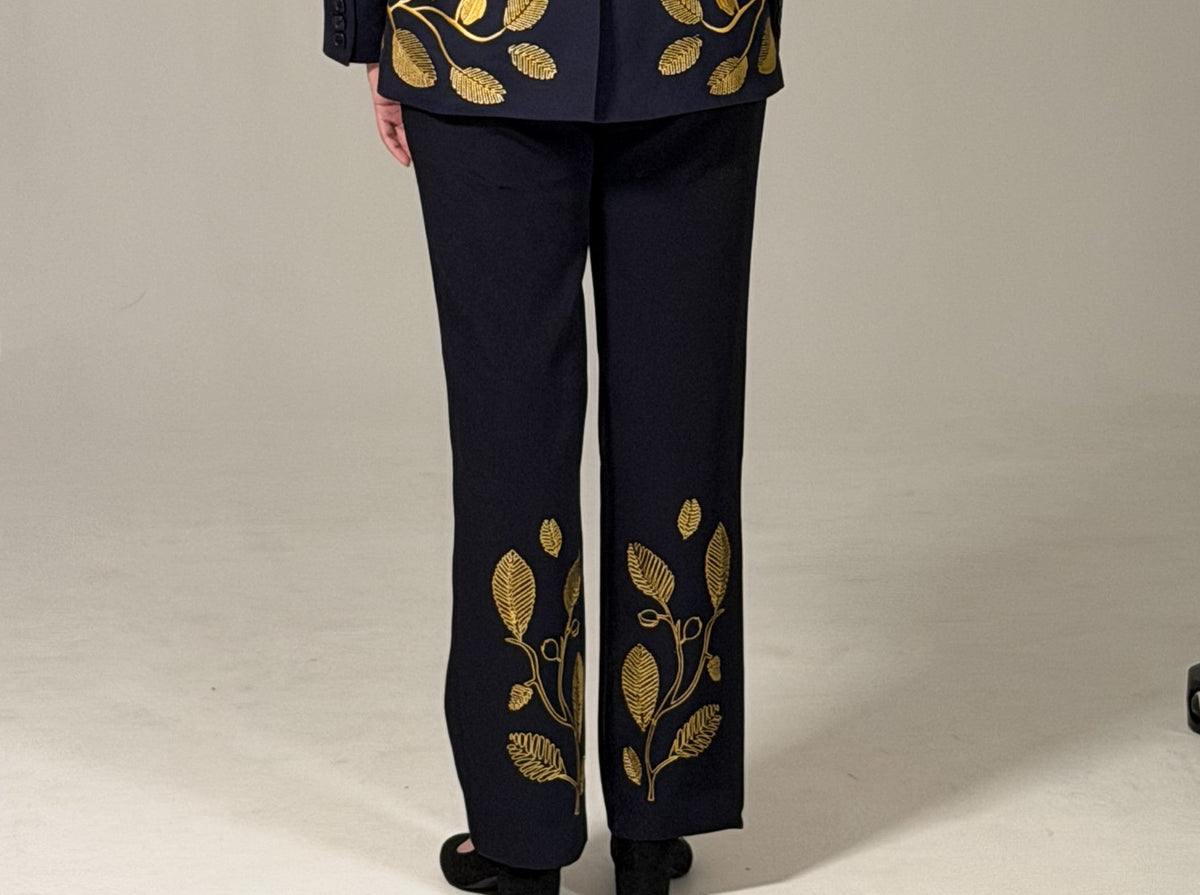
Hang trousers from the waistband with suitable clips or fold them carefully over a padded hanger. Align the seams and existing crease before storing to help preserve their shape.
Avoid narrow hangers or sharp clips that may leave impressions in the fabric.
EMBROIDERY AND DELICATE DETAIL
Protect embroidery from friction, jewellery and rough surfaces that may catch the thread. Do not iron directly over embroidered areas.
If a thread becomes loose, do not pull it. Stop wearing the garment if continued movement could enlarge the damage and seek professional repair where necessary.
BETWEEN SEASONS
Clean garments before placing them into long term storage, as untreated marks can become more difficult to remove over time.
Store pieces in a cool, dry and dark space with room for air to circulate. Use breathable covers rather than sealed plastic. Any moth protection should be placed nearby without resting directly against the garment.
WHEN A GARMENT NEEDS ATTENTION
A loose button, open seam, damaged lining or lifted embroidery thread can often be repaired. Addressing small issues early can prevent more extensive damage.
Stop wearing the garment if doing so may worsen the problem. Further guidance can be found within the SADAA Repair and Longevity guide.
EXACT CARE INFORMATION
Every SADAA garment carries its own care instructions on the care label and within its digital product information.
The information provided for the individual garment always takes precedence over this general guide. If you remain uncertain, contact SADAA before treating the garment.