MATERIALS
CHOSEN WITH INTENTION
Materials are chosen in relation to the whole garment. We consider how a fabric moves, holds structure, meets the skin, carries detail and responds to wear.
No material is treated as universally superior. Its value depends on its quality, construction, purpose and care. This guide introduces fibres that may appear across SADAA collections as the material library evolves.
NATURAL FIBRES
COTTON
Cotton is valued for its breathability, strength and versatility. Depending on its weave and finish, it can create anything from a soft, fluid surface to the clean structure required in tailoring.
WOOL
Wool offers warmth, resilience and natural shape retention. Its ability to recover from wear makes it particularly suited to tailoring and garments intended to hold their form.
LINEN
Linen is made from flax and is valued for its breathability, strength and distinctive texture. Its natural creasing is part of its character and gives the fabric a relaxed expression over time.
SILK
Silk is known for its softness, strength and subtle lustre. It may be used where fluidity, lightness or a refined finish is important.
REGENERATED CELLULOSE FIBRES
CUPRO
Cupro is a smooth regenerated cellulose fibre often used in linings. It offers a soft hand, fluid movement and comfort against the body, allowing a garment to move easily over other layers.
VISCOSE
Viscose is derived from cellulose and is valued for its softness, breathability and drape. Its character can vary considerably depending on the yarn, weave and finishing process.
RAYON
Rayon is a broad term for regenerated cellulose fibres and is valued for its soft feel, breathability and fluid drape. Its characteristics can vary depending on the manufacturing process and construction of the fabric.
MODAL
Modal is a regenerated cellulose fibre with a smooth, soft surface. It is often selected for comfort, fluidity and its ability to retain a refined appearance.
LYOCELL
Lyocell is a regenerated cellulose fibre known for its smooth feel, strength and fluid movement. It can bring softness to a garment while maintaining a clean finish.
ACETATE
Acetate is a cellulose based fibre with a smooth surface and gentle lustre. It is often used in linings and garments where drape and an elegant finish are important.
SUPPORTING FIBRES
ELASTANE
Elastane is used in small proportions to introduce flexibility and recovery. In tailored garments, it can improve comfort and ease of movement without compromising structure.
POLYESTER AND POLYAMIDE
Polyester and polyamide may be used where strength, stability, recovery or resistance to wear is required. SADAA approaches these fibres deliberately, using them where their functional qualities support the performance or detail of the garment.
LININGS
A lining influences how a garment feels, moves and sits on the body. We consider softness, breathability, durability and ease of movement when selecting lining fabrics.
The lining composition may differ between garments according to the weight, construction and intended use of each piece.
EMBROIDERY AND DETAIL
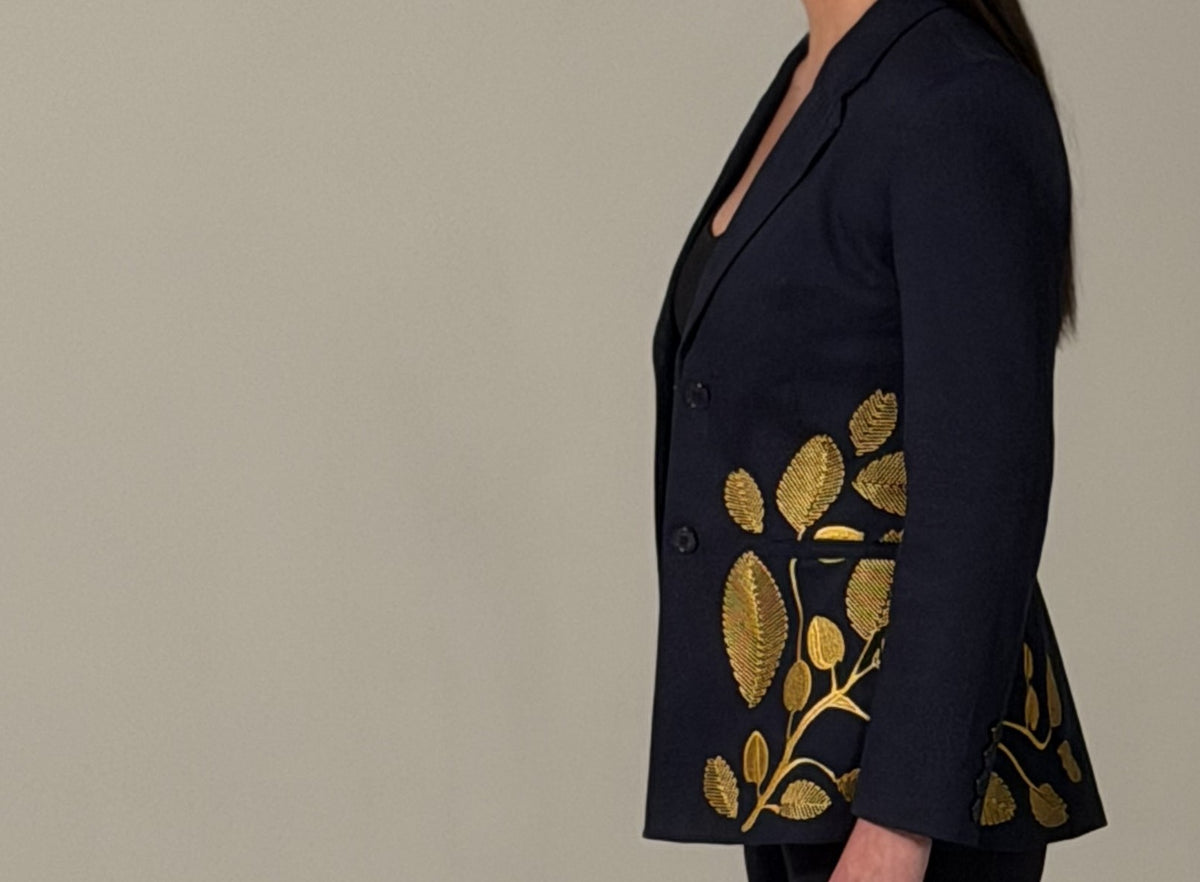
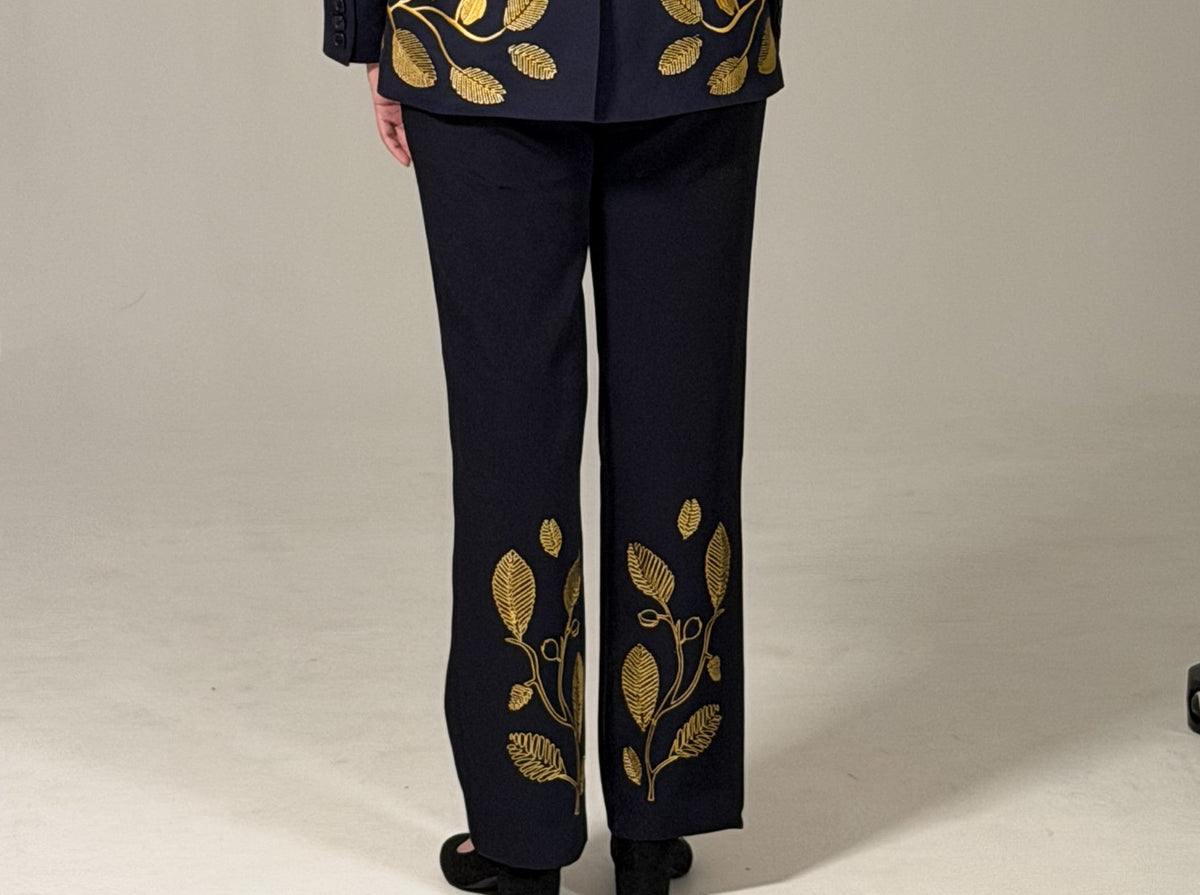
Embroidery is part of SADAA’s design language. Thread is selected for colour, texture, definition and durability, while placement is considered in relation to the cut and movement of the garment.
Buttons, interlinings, pocketing and other supporting components are chosen according to the function and construction of each design.
EXACT COMPOSITION
Not every material described in this guide appears in every SADAA collection. The exact composition of each garment can be found on its product page, care label and within its digital product information.
Information provided for the individual garment always takes precedence over this general guide.